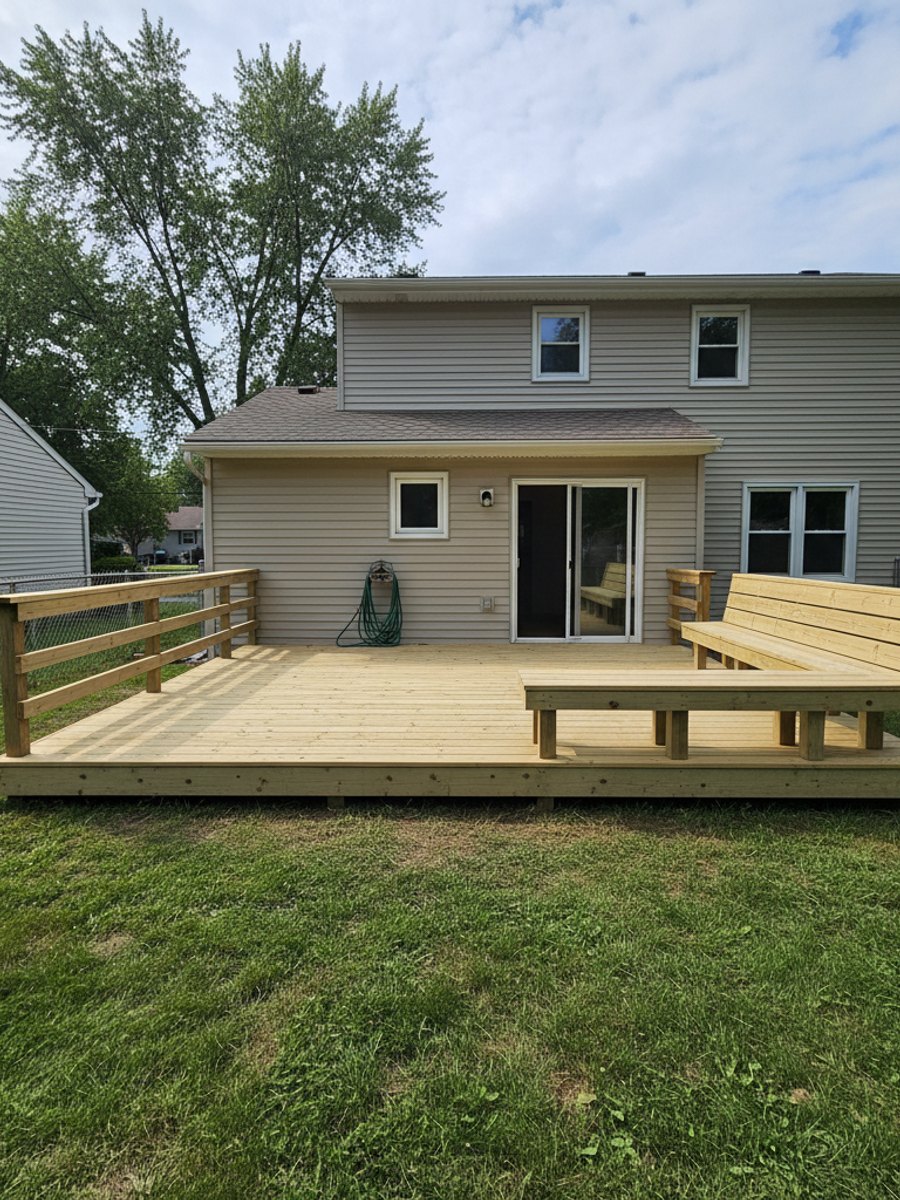
Berwyn's housing stock is mostly brick bungalows and Cape Cods from the 1920s through the 1950s, on lots that run narrow, often 30 or 40 feet wide, with a detached garage off the back alley. That layout shapes almost every deck job in town. Access is tight, the yard is small, and whatever gets built has to work with a lot line that's usually close on both sides. A contractor who's worked here knows that before they ever pick up a tape measure.
Picking the right person to build it matters more than picking the right board color. A deck is a structure attached to your house, sitting on footings in the ground, holding up your family's weight twenty feet in the air sometimes. Get the wrong person and you find out in year three, when the railing wobbles or the ledger board starts pulling away from the siding.
What the ground here actually does
Cook County soil is heavy clay in most places, and Berwyn is no exception. Clay holds water, then swells when it's wet and shrinks when it dries out. Combine that with our freeze-thaw cycle, and you get frost heave that can lift a footing that wasn't poured deep enough. The frost line in this area runs around 42 inches. Any deck footing that doesn't go below that depth is a footing that can move every winter, whether the builder tells you that or not.
A good builder digs to depth, not to a number that's convenient. They'll also tell you if your yard drains poorly, which a lot of Berwyn lots do, since the grading on older streets was never built with modern drainage in mind. Water pooling under a deck rots ledger boards and joists from underneath, where you can't see it until the wood is soft.
Permits and the Village of Berwyn
Almost any deck that's attached to the house, or elevated more than a step or two, needs a permit through the Village of Berwyn building department. That permit process usually means a plot plan showing setbacks from the property line, and an inspection of the footings before they get covered up, then a framing inspection before the decking goes down. If a contractor tells you permits are a waste of time or that they'll just get it done without one, that's a decision that becomes your problem, not theirs, if the village ever flags it during a home sale inspection.
Berwyn's lots being narrow also means setback rules matter more here than in a subdivision with half-acre lots. A deck that crowds the side yard can trigger a variance conversation you didn't know you needed. A builder who's pulled permits in this town before will know the setback numbers without having to guess.
What a real quote looks like
A serious quote spells out footing depth, post spacing, joist size and spacing, and what's holding the ledger board to your house. It names the decking material by product, not just "composite" or "wood." It says whether the price includes the permit fee and who's pulling it. If a quote is one number on a napkin with no breakdown, that's not a quote, that's a guess, and guesses are how homeowners end up paying twice.
Ask what span table they're using for the joists. Pressure-treated southern pine has published span limits based on spacing and board size, and a 2x8 joist at 16 inches on center can only carry so much before it needs a beam underneath it. If the builder can't answer that without checking, they haven't built enough decks.
Materials that hold up to Chicago winters
Pressure-treated lumber is still the most common frame material here, and it should be rated for ground contact if any part touches soil or sits close to it. Composite decking has gotten a lot better over the last ten years and handles our freeze-thaw swings without cupping the way old wood decking sometimes does, but it costs more up front. Cedar looks good for a few years and then needs real upkeep, staining or sealing every two to three years if you want it to last through our humid summers and salted winters.
The ledger board, the piece bolted to your house that the whole deck hangs from, needs proper flashing behind it so water doesn't get channeled into your foundation wall or basement. This is the single most common failure point on older deck jobs in this area, because a lot of decks built in the 80s and 90s were nailed on without flashing at all. If a builder doesn't bring up flashing on their own, ask them about it directly.
Red flags that mean you walk
- They won't pull a permit or tell you it's not needed for an attached deck.
- The quote has no mention of footing depth or post size.
- They ask for full payment up front before any material is delivered.
- They can't name the lumber grade or decking product by name.
- They have no insurance certificate to show you, or hesitate when you ask for one.
None of these things are hard to check. A licensed, insured contractor will hand over proof without being asked twice.
What a fair timeline looks like
A standard deck job in this area, once the permit is approved, usually runs one to two weeks depending on size and weather. Footings need to cure for at least a couple of days before framing loads onto them. Staining or sealing a new deck should wait 30 to 60 days after installation to let pressure-treated lumber dry out enough to actually take the sealant, otherwise it just sits on the surface and peels the following spring. If someone tells you they can stain a brand new deck the day it's finished, that's a sign they're rushing the job, not doing you a favor.
Hiring a deck builder in Berwyn comes down to a handful of practical questions: how deep are the footings, who's pulling the permit, what's holding the ledger to the house, and can they show you insurance. Ask those four things and most of the bad contractors filter themselves out before you ever sign anything. If you want a second opinion on a quote you've already got, or you're starting from scratch, Berwyn Deck Solutions is happy to walk through it with you.